Hydrogen Now Deploys to Vercel: A New Era for Shopify Headless Development

Shopify has announced an exciting update for headless commerce developers: Hydrogen developer preview can now be deployed directly to Vercel.

Hydrogen Now Deploys to Vercel: A New Era for Shopify Headless Development
4 sections

What's New?

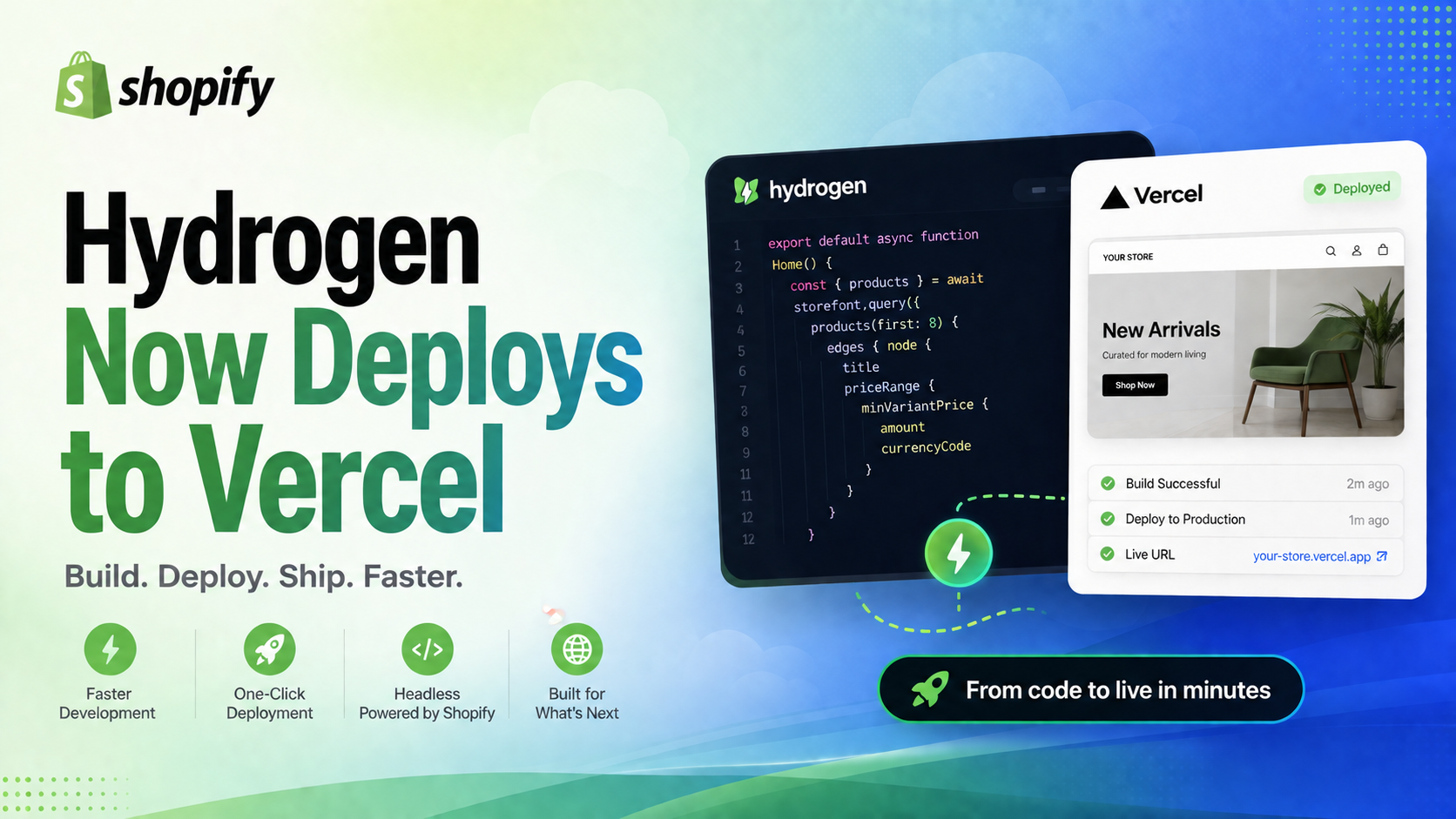
The Hydrogen developer preview now includes a Deploy to Vercel button.

With a single click, Shopify automatically:

  • Creates a GitHub repository from the official starter template.
  • Sets up a new Vercel project.
  • Installs dependencies.
  • Builds and deploys your storefront.
  • Previously, developers needed to configure their local development environment before deploying. Now, you can get a working storefront online almost instantly.

    A Complete Starter Storefront

    The deployed template isn't just a blank project.

    It already includes many essential ecommerce features, including:

  • Typed Storefront API client
  • Shopping cart functionality
  • Product pages
  • Collection pages
  • Modern project structure
  • Production-ready configuration
  • To connect the storefront to your own Shopify store, simply add your Headless channel credentials, and your products become available immediately.

    Why This Matters

    Faster Development

    Developers no longer need to spend time configuring environments before experimenting with Hydrogen.

    A storefront can be deployed in minutes.

    Easier Learning Experience

    For developers new to Shopify Headless, this dramatically lowers the learning curve.

    Instead of spending hours setting up tooling, they can start building features immediately.

    Better Collaboration

    Because the deployment starts from a GitHub repository connected to Vercel, teams can collaborate using familiar Git workflows while benefiting from Vercel's CI/CD pipeline.

    Perfect for Prototyping

    Need to build a proof of concept for a client?

    Instead of spending time configuring infrastructure, you can launch a production-ready demo with just a few clicks.

    More Than Just Vercel Deployment

    This announcement is part of a broader collaboration between Shopify and Vercel.

    Both companies are rebuilding Hydrogen as a more open, runtime-agnostic framework, allowing developers to use Shopify's commerce primitives alongside popular frameworks such as Next.js, Nuxt, and Svelte without being tied exclusively to Shopify's Oxygen hosting platform.

    This represents a major shift toward a more flexible and open headless ecosystem.

    Who Should Try It?

    This new deployment experience is ideal for:

  • Shopify Headless developers
  • Next.js developers exploring ecommerce
  • Agencies building custom storefronts
  • Teams creating proof-of-concept projects
  • Developers learning Hydrogen for the first time
  • If you've been curious about Hydrogen but didn't want to deal with the initial setup, now is a great time to start.

    Final Thoughts

    The new Deploy to Vercel experience removes one of the biggest barriers to adopting Hydrogen.

    Instead of spending time configuring environments, developers can focus on what matters most—building exceptional storefront experiences.

    Combined with Shopify's vision of making Hydrogen open source and runtime-agnostic, this update signals an exciting future for headless commerce development.

    Whether you're building a custom storefront with React, experimenting with Next.js, or creating a client demo, deploying Hydrogen has never been easier.

    Tags

    Related Articles

    Unlock Retail Store Discovery with Shopify’s New UCP Location Search & Lookup

    Unlock Retail Store Discovery with Shopify’s New UCP Location Search & Lookup

    Shopify now lets apps locate a merchant’s physical stores via UCP location search and lookup. Learn what changed, who’s affected, and how to add the capabilities to your storefront integration.

    October 22, 20264 min
    Reactive Storage Boosts POS UI Extensions with Real‑Time Sync

    Reactive Storage Boosts POS UI Extensions with Real‑Time Sync

    Shopify’s latest POS UI extension update introduces shopify.storage.current, a reactive storage API that automatically syncs data across extension targets on the same device. Learn what changed, who it impacts, and how to implement it in minutes.

    October 22, 20264 min
    s‑pos‑list Arrives: Virtualized Lists Transform Shopify POS UI Extensions

    s‑pos‑list Arrives: Virtualized Lists Transform Shopify POS UI Extensions

    Shopify POS UI extensions get a powerful new component—s‑pos‑list—in the 2026‑10 API. Learn what changed, who it impacts, and how to adopt the virtualized list for faster, memory‑efficient rendering.

    October 22, 20264 min
    Polaris 2.0 Is Now Stable: What Shopify Developers Must Do Today

    Polaris 2.0 Is Now Stable: What Shopify Developers Must Do Today

    Polaris 2.0 has moved to the stable CDN, bringing a redesigned admin look, new semantic versioning, and updated TypeScript types. Learn how to switch script tags, update React Router apps, and keep your Shopify extensions on the latest UI framework.

    October 22, 20264 min